Who Owns AI-Created Content?
Navigating the Legal Minefield of Artificial Intelligence Creativity. Legal and ethical implications of AI-generated art, music, and writing.
7/9/20255 min read
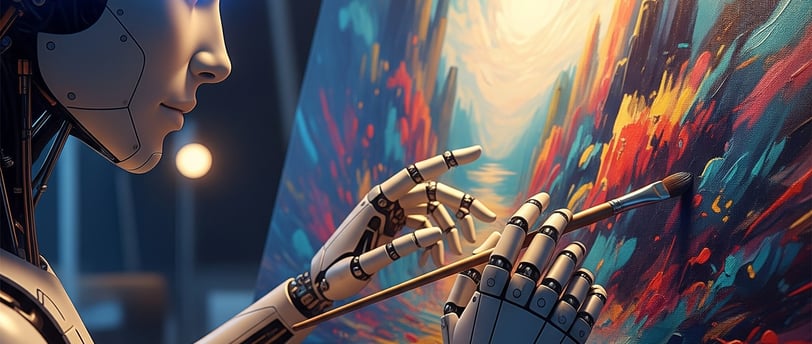
The rise of artificial intelligence has fundamentally transformed how we create, consume, and think about intellectual property. From AI-generated artwork selling for millions at auction houses to algorithms composing symphonies and writing novels, we're witnessing an unprecedented shift in the creative landscape. But as AI becomes increasingly sophisticated at producing human-like content, a critical question emerges: Who actually owns the rights to AI-created works?
This question isn't merely academic—it's reshaping entire industries and forcing legal systems worldwide to grapple with concepts they were never designed to handle. The answer affects everyone from individual creators and businesses to tech companies and consumers, making it one of the most pressing intellectual property challenges of our time.
The Current Legal Landscape: A Patchwork of Uncertainty
Traditional Copyright Framework
Copyright law has traditionally required human authorship as a fundamental prerequisite for protection. In the United States, the Copyright Act protects "original works of authorship fixed in any tangible medium of expression," but the U.S. Copyright Office has consistently maintained that works must be created by human authors to qualify for copyright protection.
This human-centric approach stems from copyright's original purpose: incentivizing human creativity by granting exclusive rights to creators. The system assumes a human mind behind every protected work, making decisions about expression, style, and content. When AI enters the equation, this foundational assumption crumbles.
International Variations
Different countries are approaching AI-generated content ownership with varying degrees of flexibility. The United Kingdom's Copyright, Designs and Patents Act includes provisions for computer-generated works, granting copyright to "the person by whom the arrangements necessary for the creation of the work are undertaken." This suggests that whoever operates or programs the AI system might hold the rights.
Similarly, some jurisdictions are exploring frameworks that could grant limited rights to AI-generated content, though these remain largely theoretical. The European Union is developing comprehensive AI regulations, but copyright implications remain complex and unsettled.
The Players in AI Content Creation
The AI Developer
Companies like OpenAI, Google, and Adobe invest billions in developing AI systems capable of generating creative content. These organizations argue they should retain significant rights to AI-generated works since their algorithms and training data make creation possible. They've developed the underlying technology, curated training datasets, and created the systems that enable content generation.
However, this position faces challenges. If developers owned all AI-generated content, it could create unprecedented monopolies over creative output, potentially stifling innovation and limiting access to AI tools.
The User/Operator
Individuals and businesses using AI tools to generate content often believe they should own the resulting works. They provide the prompts, make creative decisions about direction and style, and often perform additional editing or refinement. This perspective treats AI as a sophisticated tool, similar to a camera or word processor, with the user as the true creative force.
The user ownership model aligns with traditional notions of authorship, where the person making creative choices receives copyright protection. However, it raises questions about the degree of human involvement required and whether simple prompt engineering constitutes sufficient creative input.
The Training Data Contributors
AI systems learn from vast datasets containing existing copyrighted works. Artists, writers, and musicians whose works were used to train AI models argue they deserve compensation or ownership stakes in AI-generated content. This perspective highlights the ethical implications of using existing creative works without explicit permission or compensation.
Several high-profile lawsuits are currently challenging AI companies' use of copyrighted material for training purposes, with outcomes likely to significantly impact future AI development and content ownership frameworks.
Industry-Specific Implications
Visual Arts and Design
The art world has been particularly disrupted by AI-generated content. AI art tools can create stunning visual works in seconds, raising questions about the value of human artistic skill and the nature of creativity itself. Gallery owners, collectors, and artists are struggling to determine how to price, authenticate, and legally protect AI-generated artwork.
Commercial applications face additional complexity. If a business uses AI to generate logos, marketing materials, or product designs, unclear ownership rights could lead to costly legal disputes or inability to protect valuable intellectual property.
Music and Audio Production
AI-generated music presents unique challenges due to the industry's complex licensing structure. Music involves multiple types of rights—composition, performance, and mechanical—each potentially owned by different parties. When AI generates music, determining who owns which rights becomes exponentially more complicated.
Record labels, streaming platforms, and performing rights organizations are developing new frameworks to handle AI-generated content, but consensus remains elusive. The ability to generate music in the style of specific artists also raises questions about personality rights and artistic integrity.
Written Content and Literature
AI writing tools are transforming journalism, marketing, and creative writing. News organizations using AI to generate articles must navigate questions of authorship, liability, and editorial responsibility. Marketing agencies creating AI-generated content for clients need clear ownership structures to avoid disputes.
The publishing industry faces particular challenges as AI-generated books and articles become more sophisticated. Traditional concepts of authorship, editorial responsibility, and creative authenticity are being redefined in real-time.
Ethical Considerations Beyond Legal Framework
Attribution and Transparency
Even when legal ownership is clear, ethical questions remain about attribution and transparency. Should AI-generated content be labeled as such? Do consumers have a right to know when content is artificially generated? These questions affect everything from academic integrity to consumer protection.
Impact on Human Creators
The rise of AI-generated content has profound implications for human creators' livelihoods. If AI can produce content faster and cheaper than human creators, what happens to creative professions? Ownership frameworks must balance innovation incentives with protecting human creative workers.
Cultural and Artistic Value
AI-generated content raises fundamental questions about the nature of creativity and artistic value. If ownership depends on human creativity, how do we define and measure creative input? These philosophical questions have practical implications for how legal systems approach AI-generated content.
Emerging Solutions and Best Practices
Contractual Frameworks
Many organizations are developing contractual solutions to address AI content ownership. Service agreements, employment contracts, and licensing arrangements can establish clear ownership rights regardless of uncertain legal frameworks. These contracts often specify who owns AI-generated content based on who initiated the creation process, provided input, or made final creative decisions.
Hybrid Approaches
Some experts advocate for hybrid ownership models that recognize multiple stakeholders' contributions. These frameworks might grant developers certain rights while allowing users to claim ownership of specific applications or outputs. Such approaches could provide more nuanced solutions than traditional all-or-nothing ownership models.
Industry Standards and Guidelines
Professional organizations and industry groups are developing standards for AI-generated content ownership. These guidelines help establish best practices and provide frameworks for resolving disputes without lengthy litigation.
Looking Forward: Recommendations for Stakeholders
For Businesses
Companies using AI-generated content should develop clear policies addressing ownership, liability, and attribution. This includes reviewing service agreements with AI providers, establishing internal guidelines for AI use, and considering intellectual property implications before implementing AI tools.
For Creators
Individual creators should stay informed about AI developments affecting their industries and consider how to adapt their practices. This might involve learning to work with AI tools, understanding licensing implications, or advocating for protective legislation.
For Policymakers
Governments need to develop comprehensive frameworks addressing AI-generated content ownership while balancing innovation incentives with creator protection. This requires collaboration between legal experts, technologists, and industry stakeholders.
Conclusion
The question of who owns AI-created content doesn't have simple answers, but it demands urgent attention. As AI capabilities continue advancing, the stakes of getting this right only increase. The frameworks we develop today will shape the future of creativity, innovation, and intellectual property for generations to come.
Success requires recognizing that AI-generated content ownership isn't just a legal issue—it's a fundamental question about the nature of creativity in the digital age. By thoughtfully addressing these challenges now, we can create systems that encourage innovation while protecting creators and maintaining the integrity of our creative industries.
The future of AI-generated content ownership will likely involve nuanced solutions that recognize multiple stakeholders' contributions while providing clear, practical frameworks for creators, businesses, and developers. As this landscape continues evolving, staying informed and adaptable will be crucial for anyone involved in creative industries or AI development.