Is AI Being Weaponized?
As nations race to gain technological superiority, the integration of AI into military operations is accelerating. This blog explores the rise of military AI, the capabilities and concerns surrounding autonomous weapons systems, and the profound ethical dilemmas posed by this new frontier of digital warfare.
7/13/20254 min read
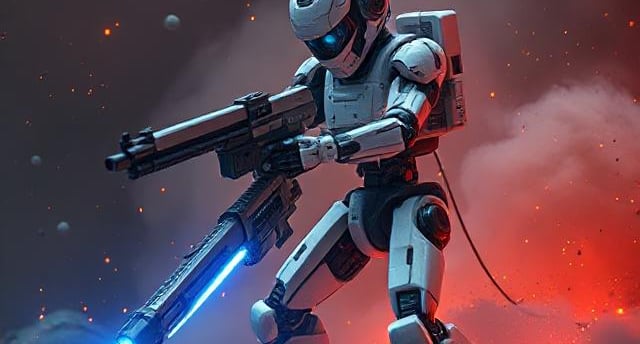
Military AI, Autonomous Drones, and the Ethics of Modern Warfare
In recent years, artificial intelligence has evolved from a futuristic concept into a disruptive force shaping nearly every industry—including warfare. Once confined to the realm of science fiction, autonomous drones, intelligent targeting systems, and battlefield robots are no longer just ideas. They’re real, they’re being deployed, and they’re changing the very nature of conflict. This raises an urgent question for governments, technologists, and global citizens alike:
Is AI being weaponized? And if so, at what cost?
The Rise of Military AI: From Data to Dominance
Artificial intelligence, particularly in the form of machine learning and computer vision, has found powerful applications in defense. Militaries worldwide are investing billions into AI-driven technologies that can process vast data streams, recognize patterns, and make decisions faster than any human could. Key areas of military AI include:
Surveillance and Reconnaissance: AI-powered drones and satellite imagery tools can detect threats in real-time.
Target Identification: Algorithms can analyze data to identify and classify enemy assets with remarkable precision.
Cyber Warfare: AI systems can proactively detect and neutralize cyber threats before they escalate.
Logistics and Strategy: AI optimizes supply chains, troop deployments, and battlefield simulations.
According to the Stockholm International Peace Research Institute (SIPRI), over 30 countries are actively developing or deploying military AI. The U.S., China, and Russia are at the forefront, with rising powers such as India, Israel, and South Korea not far behind.
The Era of Autonomous Drones
One of the most controversial applications of AI in warfare is the development of autonomous weapon systems (AWS)—machines capable of selecting and engaging targets without direct human control. These include:
Loitering Munitions ("Kamikaze drones") that hover over battlefields and strike targets based on predefined parameters.
AI-powered UAVs (Unmanned Aerial Vehicles) used for both reconnaissance and lethal strikes.
Ground Robots equipped with lethal payloads for urban combat scenarios.
The integration of autonomy into these systems can increase speed and efficiency on the battlefield. But it also creates chilling possibilities. If a drone can independently decide who lives or dies, who is accountable if it makes a mistake?
In 2021, a UN report suggested that autonomous drones were deployed in Libya that may have attacked targets without direct human command—marking a potential turning point in warfare history.
Ethical Flashpoints: Who Decides When Machines Kill?
At the heart of the AI weaponization debate is the ethical challenge of delegating life-and-death decisions to machines.
Consider the following ethical concerns:
1. Loss of Human Judgment
Humans, with all their imperfections, still bring empathy and situational awareness to life-or-death decisions. An algorithm, no matter how advanced, lacks this moral compass. Delegating these decisions to a machine removes crucial human oversight and could lead to civilian casualties or escalation of conflict.
2. Bias and Inaccuracy
AI systems are only as good as the data they are trained on. If training datasets contain biases—racial, cultural, or geopolitical—AI decisions could unjustly target certain groups. A flawed facial recognition algorithm used in combat could mistakenly identify a civilian as a combatant, with lethal consequences.
3. Accountability Vacuum
When an autonomous drone misfires or causes unintended deaths, who is held responsible? The developer? The military commander? The machine itself? Traditional frameworks of military accountability struggle to address this new paradigm.
4. Escalation Risk
AI-powered systems can act faster than human decision-makers. In a high-stakes conflict, that speed could lead to miscalculations and rapid escalation—potentially triggering a war between nuclear-armed states.
Global Response: Regulation vs. Arms Race
The international community is divided on how to respond to the militarization of AI.
Advocates for Regulation:
Many humanitarian organizations and AI ethicists are calling for an outright ban on lethal autonomous weapons (LAWs). The Campaign to Stop Killer Robots, backed by the UN, argues that allowing machines to kill undermines human dignity and violates international humanitarian law.
Opponents of Bans:
On the other hand, several military strategists argue that banning military AI is unrealistic and would put compliant nations at a strategic disadvantage. Instead, they propose frameworks for responsible AI usage, including:
Human-in-the-loop systems where final decisions are still made by a person.
Clear rules of engagement for autonomous systems.
Transparent auditing and testing of AI algorithms.
So far, the United Nations Convention on Certain Conventional Weapons (CCW) has failed to reach consensus on a binding treaty. Meanwhile, technological development continues unchecked.
Case Studies: AI on the Modern Battlefield
1. Project Maven – United States
Launched by the U.S. Department of Defense in 2017, Project Maven uses AI to analyze drone footage and identify potential threats. Although originally for surveillance, critics feared it could evolve into an autonomous strike system. After Google employees protested their involvement, the company pulled out—highlighting tensions between Silicon Valley ethics and military ambitions.
2. Swarms of AI Drones – China
China is developing “swarm drones” that can act in concert using decentralized AI algorithms. These drone swarms can overwhelm defenses and carry out coordinated strikes. The swarm model mimics nature—like flocks of birds—but with deadly consequences.
3. Harpy Loitering Munitions – Israel
Israel’s Harpy drones can autonomously identify and destroy enemy radar systems without human input once launched. These are already in use and represent one of the most advanced autonomous combat systems today.
Looking Ahead: Can AI Be Controlled?
The weaponization of AI is no longer a question of if—but how far and how fast. The genie is out of the bottle, and it won’t be put back in. However, that doesn’t mean humanity is powerless.
A few key steps forward:
1. International Treaties
Much like the Geneva Conventions set rules for warfare in the 20th century, the 21st century demands an AI Geneva Convention—clear, enforceable international laws governing the use of military AI.
2. Tech Industry Accountability
Companies developing AI must adopt firm ethical guidelines about how their technologies can be used. Transparency, impact assessments, and the right to refuse military contracts should be part of corporate policy.
3. Human-in-the-Loop Mandates
Autonomous systems should always require human authorization for lethal force—especially in unpredictable or civilian-rich environments.
4. Public Awareness and Debate
AI and warfare shouldn’t be left solely to generals and engineers. Citizens, ethicists, lawmakers, and academics must be part of the conversation to ensure democratic oversight.
Final Thoughts: The Battle for AI’s Soul
Artificial intelligence is a dual-edged sword. In the right hands, it can enhance peacekeeping, reduce human casualties, and prevent wars through better intelligence. In the wrong hands—or in autonomous systems with no hands at all—it can become a tool of mass destruction beyond human control.
So yes, AI is being weaponized. But how it is used—whether for destruction or deterrence—still depends on us.
The real war is not between nations or machines. It’s between the promise of technology and the peril of losing our humanity.
Let’s make sure we choose wisely.